






Our Founder
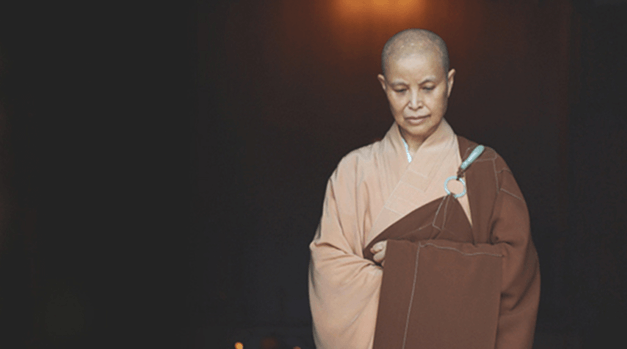
Master Cheng Yen
- Master Cheng Yen has inspired Tzu Chi volunteers across the world to extend compassion beyond borders, religions, and ethnicities. In recognition of her humanitarian impact, she was named one of TIME Magazine’s 100 Most Influential People in 2011.
- Master Cheng Yen has shared a profound friendship of over 30 years with Sister Angela Mary Doyle from Australia. Sister Angela has visited Taiwan five times, walking hand-in-hand with Master Cheng Yen during her trips to Hualien. “Language was never a barrier between us,” Sister Angela once said. “We communicated through great love, mutual trust, and deep respect.”
- The renowned Jing Si Aphorisms, based on the lived wisdom and daily teachings of Master Cheng Yen, are concise yet deeply meaningful. These teachings have been translated into over 10 languages—including English, German, Japanese, French, and Spanish—and are read by audiences worldwide
- In 2010, marking 20 years of environmental advocacy, Master Cheng Yen visited 143 Tzu Chi recycling stations across Taiwan to personally express her appreciation to volunteers. “You’ve cultivated immeasurable merit,” she said. “As your teacher, I have no way to repay you—except to come and thank you in person.”
From Suffering, Compassion Arises
Master Cheng Yen was born in 1937 in a modest town in central Taiwan. Raised by her uncle and aunt, she experienced hardship from an early age. At just seven years old, she witnessed the devastation of World War II—bombings, destruction, and fear that left a lasting impression on her young heart. These early encounters with impermanence and suffering planted the seeds of her lifelong contemplation on the nature of life and the meaning of existence.
At the age of 21, she faced a profound personal loss—her father passed away suddenly from illness in less than 24 hours. This life-changing moment intensified her spiritual search. Seeking answers to life’s deepest questions, she began visiting Ci Yun Temple, turning to Buddhist teachings and guidance from monastics.
Through reflection and awakening, Master Cheng Yen came to a powerful realisation: true happiness does not lie in material comfort or financial freedom. It is found in expanding one’s love beyond family to embrace society and all living beings. To live with joy is to give selflessly, care deeply, and dedicate oneself to the well-being of others.
For the Good of Buddhism, For All Living Beings
At the age of 24, Chin-Yun left the relative comfort of her home to embark on a journey of greater purpose—to pursue the monastic path. In 1962, she arrived in Hualien, a modest and underdeveloped town on Taiwan’s eastern coast. There, she took residence in Pu Ming Temple, living a spartan and disciplined life devoted to the study and practice of Buddhism. That autumn, in a quiet act of resolve, she shaved her own head, marking her personal commitment to become a Buddhist nun. In February 1963, Chin-Yun travelled to a temple in Taipei to attend an initiation ceremony for those entering Buddhist monastic life.
Before the ceremony, she had the affinity of meeting Venerable Master Yin Shun, one of the most respected monks and scholars in contemporary Chinese Buddhism. He bestowed upon her the Dharma name “Cheng Yen,” formally recognising her entry into monastic life. With deep compassion and foresight, Venerable Master Yin Shun offered these words of guidance: “Karmic affinities have brought us together. Now that you have become a monastic, you must always remember to work for Buddhism and all living beings.” These words became the guiding principle of her life and spiritual mission.
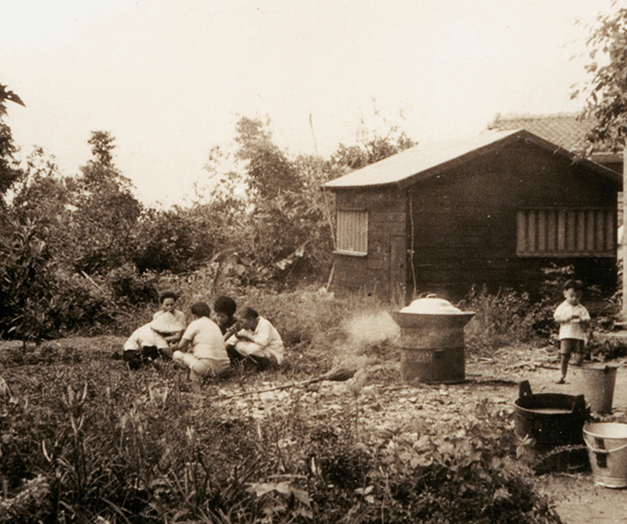
Carrying this profound teaching in her heart, Master Cheng Yen returned to Pu Ming Temple and settled into a small wooden hut behind the temple. There, she immersed herself in the recitation and study of the Lotus Sutra. As she refused to accept any offerings from the laity, life was extremely difficult. In time, several young women, inspired by her teachings and way of life, chose to follow her as disciples. Together, they shared the humble space and cultivated the Dharma in unity, continuing their practice at Pu Ming Temple.
Master Cheng Yen personally established the rules for daily living for her monastic community, and one of them was to be self-reliant and self-sufficient. Instead of accepting offerings from the laity, the nuns earned a meagre living from farm labour, knitting sweaters, and making candles, Jing Si Soy Powder, and publications for sale. Even to this day, this rule is strictly adhered to at the Jing Si Abode, the residence of Master Cheng Yen and her monastic disciples.
The Origin of Tzu Chi
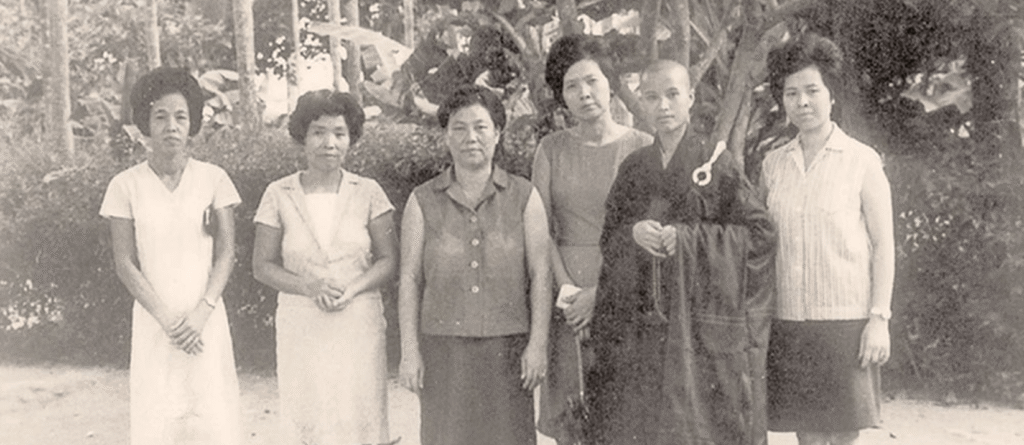
In 1966, a chance encounter with suffering left a lasting impression on Master Cheng Yen. A woman in labour, unable to receive timely medical care, passed away and left behind a pool of blood. This painful scene awakened a deep sense of compassion in Master Cheng Yen’s heart and inspired her to take action. It became the starting point of her aspiration to establish an organisation that could relieve the suffering of the poor and provide tangible support to those in need.
Around that time, Master Cheng Yen received a visit from three Catholic nuns from Hsing Yi Girls’ High School in Hualien. During their conversation, they shared the values and service-oriented practices of their faith—how their churches also built hospitals and nursing homes to care for those in need. As they prepared to leave, one of the nuns gently posed a sincere question: “Today, I’ve come to understand that the Buddha’s compassion embraces all sentient beings, which is truly profound. But while God’s love is said to be only for humankind, we express this love by establishing institutions that serve the public. What visible contributions has Buddhism made to society?”
The question lingered in Master Cheng Yen’s heart. She reflected on how Buddhists often perform acts of kindness quietly, without seeking recognition. Though rich in compassion, such efforts were scattered and lacked organisation. She came to realise that if this love could be gathered and guided, it could become a powerful force for good. With this aspiration, she made a firm resolve: to begin by saving lives, and to let compassionate action be the expression of Buddhist practice.
On May 14, 1966 (the 24th day of the 3rd lunar month), the Buddhist Tzu Chi Merit Society was established. The mission began simply—with 30 local housewives each saving just 50 cents a day from their grocery money, pooling their efforts to help those in need. It was a humble beginning, rooted in sincerity and the belief that small kindnesses could create great goodness
One Step, Eight footprints
With deep compassion for the suffering in the world, Master Cheng Yen has long upheld a heartfelt vow: “Wherever disaster strikes, Tzu Chi volunteers will be there, offering care and support with sincerity and love.” She often describes Tzu Chi volunteers as fireflies. Though each one gives off only a small light, when gathered together with a shared purpose, they can brighten even the darkest corners. Their presence brings hope to those in distress and warmth to a world often filled with hardship.
As Tzu Chi approaches its 60th anniversary in 2026, it remains firmly rooted in a core belief: “Trust in selfless intentions, and have faith in the love and goodness within all people.” The Four Missions of charity, medicine, education, and humanistic culture have grown to include international disaster relief, bone marrow donation, community volunteerism, and environmental protection. This ever-evolving journey of compassion and service is what Master Cheng Yen describes as ‘’One Step, Eight Footprints’’, a path guided by the teachings of the Dharma.
Inspired by Master Cheng Yen’s teachings, Tzu Chi volunteers cultivate inner qualities such as sincerity, integrity, faith, and honesty, while putting compassion, joy, and selfless giving into action. Through their efforts to relieve suffering and uplift lives, they hope to inspire more people to join in doing good together. In unity, they strive to create a more compassionate world, where every home experiences peace and every community feels the warmth of human kindness